Here's the thing about vibration fatigue
You used the same toy for years. It worked beautifully. Then one day it didn't. Not because the toy broke. Not because you broke. But because your nervous system adapted.
Vibration is repetitive. Your skin, your nerve endings, your brain. they all learn the pattern. After weeks, months, or years of the same frequency hitting the same spot, your nervous system basically says "okay, I know this." Sensation dulls. Intensity creeps up. You find yourself chasing a feeling that used to find you easily.
This is why lemon vibrators (and specifically, suction-based lemon clitoral vibrators) are not just a different toy. They're a fundamentally different sensation.
Vibration vs. suction: the neuroscience breakdown
Vibrators stimulate through repetitive movement. Picture a thousand tiny punches per second. The sensation travels up through layers of tissue, activating nerve fibers in a predictable, rhythmic way.
Suction works completely differently. Instead of repetition, it creates a pulling sensation. a negative pressure that gently draws tissue upward and engages deeper nerve clusters. It's not a rhythm your nervous system has learned. It's not a frequency your skin recognizes. It's genuinely novel stimulus.
Here's the clincher. Your nervous system doesn't adapt to novelty the way it adapts to repetition. That's why switching to lemon vibrators often feels shockingly intense even at lower settings. You're not just using a different toy. You're waking up nerve pathways that vibration never fully activated.
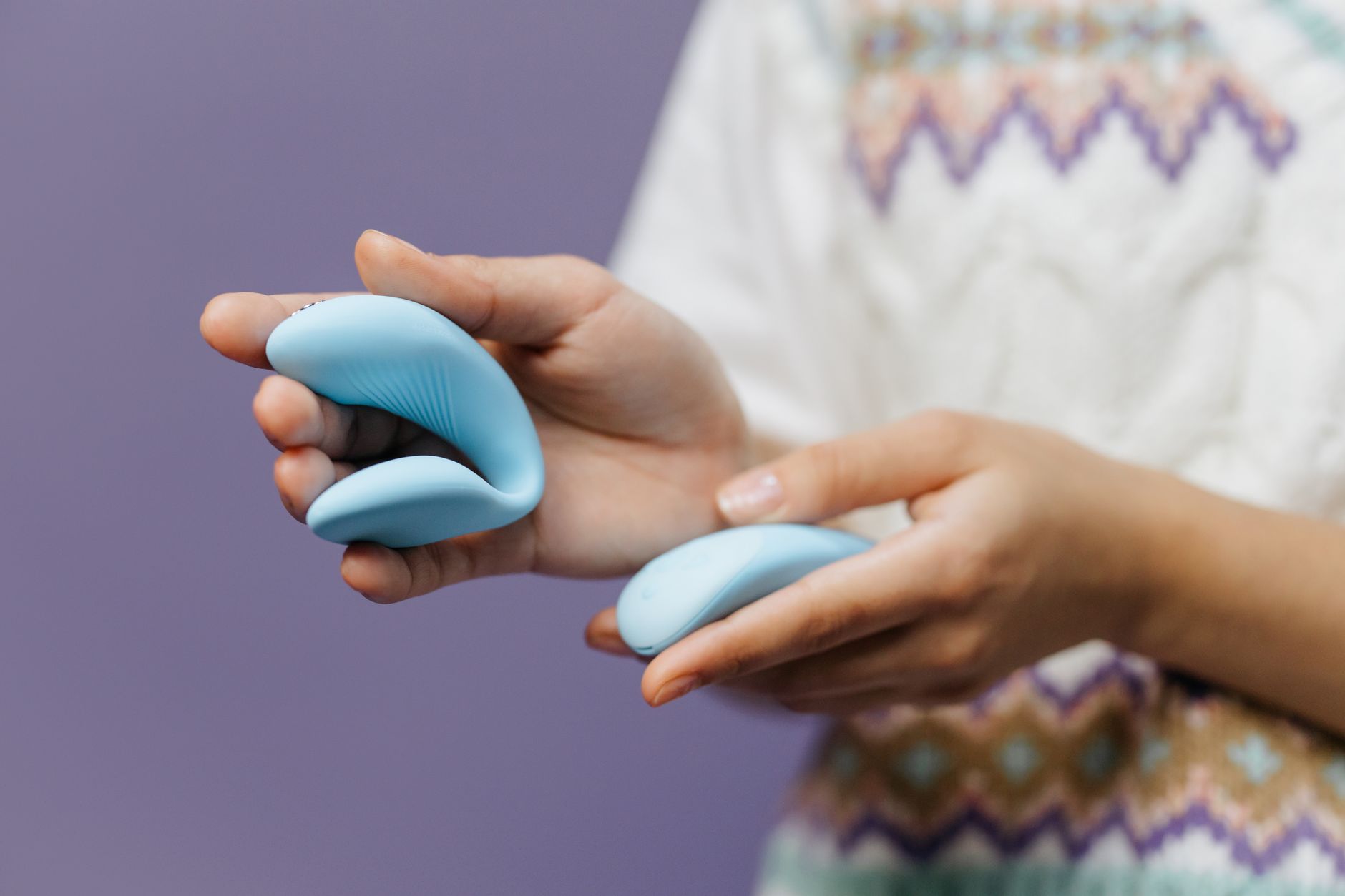
Photo by DRT.fm on Pexels
Why traditional toys stop working (and it's not your fault)
Here's what happens inside your body when you use the same vibration pattern repeatedly.
Your skin has two layers of nerve receptors. Some detect sustained pressure. Others detect change. Vibration is all about detecting that oscillating change. But vibration at, say, 100 Hz (the frequency of most wand vibrators), becomes background noise to your nervous system after enough exposure. Your brain literally turns down the volume.
Research in sensory adaptation shows that repeated stimulation causes receptors to desensitize at a predictable rate. For vibration, this happens fast. Within weeks, the pleasure curve flattens. You turn up the intensity to compensate. This works temporarily. But your nervous system adapts to higher frequencies too. You end up on an intensity treadmill that never actually lands.
Suction doesn't work this way because it's not a repetitive stimulus. Each "pulse" of suction is a change in pressure, not a rhythm. Your nervous system stays engaged because there's genuine variation happening with each cycle.
The sensitivity argument people get wrong
Talking to people who've switched to lemon vibrators, I hear the same thing over and over. "It feels so intense." "I had to start on the lowest setting." "My clitoris almost felt raw after."
That's not because suction is dangerous or because your tissue is suddenly fragile. It's because you're experiencing stimulation your nervous system hasn't learned to tune out yet.
If anything, this is good news. It means pleasure is still available. Sensation is still possible. You haven't broken. The tool just changed.
Starting slower with suction based lemon clitoral vibrators
When people switch from traditional vibrators to lemon vibrators, starting at a lower intensity isn't weakness. It's necessary.
Begin at level one or two. Spend 5 to 10 minutes just getting to know the sensation. Your nervous system needs to map what's happening. You need to feel where the intensity sits, how your tissue responds, what comfortable-but-exciting actually feels like at this new baseline.
Many people discover that lemon suction toys deliver satisfying orgasms at intensities where vibrators would've felt like almost nothing. Your nervous system is far more responsive when it's not already adapted. That responsiveness isn't fragility. It's sensitivity. And sensitivity is your friend.
The dopamine reset angle
Here's an unofficial theory from therapists and pleasure coaches who work with this shift regularly. When you've been using the same vibration for years, you're not just experiencing sensory adaptation. There's also a dopamine element.
Repetition, even pleasurable repetition, stops triggering dopamine novelty spikes. Your brain knows what's coming. Novelty. Surprise. Uncertainty. Those generate dopamine. Suction is genuinely novel to a nervous system raised on vibration.
Switching to lemon vibrators isn't just a physical reset. It's often a neurochemical one too. People report that pleasure feels more urgent, more compelling, more present. That's not marketing. That's your brain waking up to something it hasn't learned to predict yet.
What to know about tissue and suction
There's a myth that suction is rougher on tissue than vibration. It's not. In fact, how to use lemon vibrators when your clitoris feels overstimulated and raw shows that many people with sensitive or irritated tissue find suction gentler because it doesn't require the same repetitive friction.
Suction engages tissue differently. Instead of grinding intensity into one point, it distributes pressure more evenly across the area. People with genital sensitivity, those recovering from irritation, or anyone whose tissue has gotten sore from repetitive vibration often find that lemon clitoral vibrators feel less aggressive, not more.
Start low. Pay attention. Your tissue will tell you what it needs.
When vibration stops working, this is often why
If traditional vibrators have stopped delivering and you're wondering if you've broken, the real answer is more practical. You've adapted. Your nervous system is doing its job. It's protecting you from overstimulation by learning to tune out predictable stimulus.
This is also why rotating toys helps. Not because you need variety for psychological reasons. Because your nervous system genuinely needs novelty to stay engaged. If you've been using one vibrator exclusively, your nervous system has thoroughly mapped it.
Switching to a completely different stimulus type, like suction based lemon vibrators, resets that adaptation. You're not starting from zero. You're starting from a place where your nervous system has learned to ignore vibration. Suction? That's a surprise.
Photo by Madison Inouye on Pexels
How long does the novelty last
Honest answer. Eventually, your nervous system will adapt to suction too. Maybe after weeks. Maybe after months. That's not a flaw in the toy or in you. That's how your nervous system works.
But here's what changes. Once you understand that adaptation is normal, you can work with it instead of against it. Rotating between vibration and suction. Varying intensity. Taking breaks. These aren't band aids. They're sustainable practices.
Many people find that alternating between different stimulation types keeps pleasure fresh and responsive without chasing increasingly extreme intensities. That's the real win with lemon vibrators. They're not a permanent solution to adaptation. They're proof that solutions exist. Novelty works. Your body still responds.
If you've been stuck in intensity creep
Looking back at your pleasure journey and realizing you've been escalating intensity for months or years to get the same feeling. That's a sign that switching tools might actually reset the game.
Try this. Put the traditional vibrator away for two weeks. Not forever. Just away. Then try lemon vibrators at the lowest setting. Pay attention to what happens. Most people discover that sensation comes roaring back. Pleasure feels urgent again. Intensity doesn't have to mean maximum.
You're not broken. Your nervous system just needed something it hadn't learned to ignore yet.
FAQ
Why do lemon vibrators feel more intense than regular vibrators?
Suction stimulates a completely different set of nerve pathways than vibration does. Your nervous system hasn't adapted to suction the way it has to repetitive vibration. That novelty registers as intensity, even at lower settings. It's not that suction is inherently stronger. It's that your nervous system is responding to something genuinely new. After weeks of use, lemon clitoral vibrators may feel less intense as adaptation occurs, which is completely normal.
Can you use lemon vibrators if traditional vibrators stopped working for you?
Absolutely. In fact, that's often the ideal use case. If you've experienced pleasure fade or intensity creep with traditional vibrators, it means your nervous system has adapted to vibration. Suction engages different nerve pathways. Starting with lemon vibrators at low intensities can reset your nervous system's responsiveness. Many people discover that pleasure feels accessible again.
Is suction safer than vibration for sensitive tissue?
Different, not safer or more dangerous. Suction distributes pressure across a wider area instead of concentrating it in one spot, which many people with sensitive tissue prefer. Why lemon clitoral vibrators work better than wand toys for sensitive tissue explores this in depth. Always start at the lowest setting and listen to your body regardless of toy type.
How long until my body adapts to lemon vibrators too?
It varies widely. Some people notice a plateau after a few weeks. Others maintain responsive sensation for months. Once you understand that adaptation is a normal neurological process, not a personal failure, you can rotate between different stimulation types to stay engaged. Variety is the real solution, not finding the perfect toy.
Should I stop using traditional vibrators if I switch to lemon vibrators?
No need. Rotation is actually beneficial. Using different toys with different stimulation types keeps your nervous system engaged because it doesn't fully adapt to any single pattern. Many people find that alternating between lemon clitoral vibrators and traditional vibrators maintains responsiveness over the long term.
What if lemon vibrators feel uncomfortable at first?
Start at the absolute lowest setting and give yourself time to acclimate. Suction is genuinely different stimulus. Spend 5 to 10 minutes just exploring the sensation without pressure to orgasm. Your nervous system and your tissue both need time to get comfortable with something new. If discomfort persists, dial back further or reach out at contact.
The reset you've been missing
If pleasure has been feeling out of reach, if traditional vibrators have stopped delivering, if you've been climbing the intensity ladder without finding satisfaction. that's not a sign you're broken. It's your nervous system doing exactly what it's designed to do. adapt to predictable stimulus.
Lemon vibrators aren't a miracle fix. They're proof that your nervous system still responds to novelty. That pleasure is still possible. That you're not stuck on a pleasure treadmill forever.
The reset isn't about the toy. It's about understanding why sensation fades, how your nervous system works, and what happens when you introduce something genuinely different. Suction is different. Your body will notice. That's where the magic actually lives.