
Here's what nobody tells you about pleasure after 40
Your body doesn't stop wanting orgasms after 40. It just stops accepting the same delivery method. That's not a failure. It's actually useful information.
For years you might have used a traditional vibrator and gotten exactly what you needed. Fast, direct stimulation. Consistent rhythm. Simple. Then something shifts. Either the intensity feels wrong, or you need more foreplay, or you're chasing the same sensations and landing in frustration instead. Most people assume this is just aging. Some of it is. But a lot of it is biomechanical, which means it's also fixable.
Lemon clitoral vibrators work differently than standard vibrators, and the difference matters more after 40 than it does at 25.
What actually changes in your body after 40
Three things happen that affect how pleasure feels:
First, tissue sensitivity shifts. Not decreases. Shifts. Your clitoris has the same nerve density it always did, but the surrounding tissue gets thinner as estrogen gradually declines. That means direct contact that felt perfect at 30 can feel either too intense or weirdly numb. There's less give in the tissue, so the same pressure distributes differently.
Second, your pelvic floor changes. If you've been doing Kegels for years, the muscles are stronger and sometimes tighter. That's good for bladder control and not bad for sensation, but it changes the angle and intensity of orgasms. They might feel more localized, less full-body. Some people love this. Some people feel like they're missing something.
Third, arousal takes longer. Your body still gets there, but you're looking at 15-25 minutes of genuine warm-up instead of five. That's not impatience, that's biology. Bloodflow to the clitoris takes longer to peak.
None of this means you're broken. It means your pleasure works on different hardware now.
How suction-based vibrators work differently
A traditional vibrator uses direct oscillation. It vibrates back and forth against your skin at maybe 7,000-10,000 movements per second. It's efficient. It's direct. It works great if your tissue can handle that sustained contact.
A lemon suction vibrator uses gentle air-pulse technology. Instead of vibrating against the clitoris, it creates a rhythmic pulse of suction that stimulates the entire clitoral structure, including the internal bulbs. Think of it less like tapping and more like a gentle wave. The sensation is broader, less localized, and it doesn't require the same amount of direct pressure.
The practical difference: after 40, your clitoris often responds better to suction than to vibration.
Why? Several reasons. First, suction distributes sensation across a wider area, so even if some tissue is thinner or more sensitive, you're not hammering one point. Second, you can control the intensity with precision. You're not choosing between "vibrate" or "vibrate harder." You're choosing the rhythm and strength of the pulse. Third, suction creates a sensation that's almost impossible to numb. Once you build a rhythm, it's consistently available.
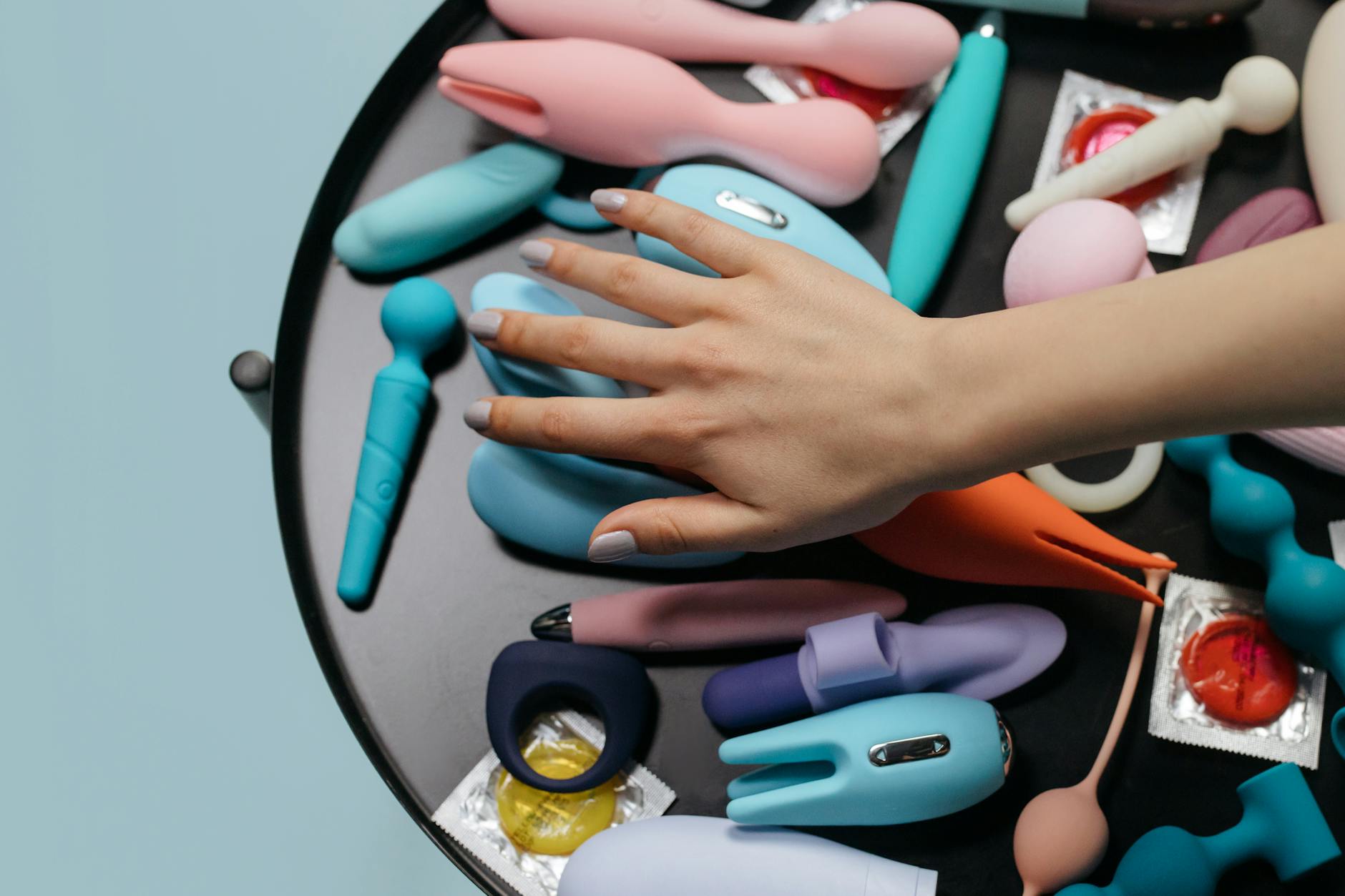
Photo by cottonbro studio on Pexels
Most people with lemon clitoral vibrators report that they can use lower settings and feel more, not less. That matters because it means you're not relying on power to get the job done. You're working with your body's actual wiring.
Why timing matters more than you think
The average person over 40 hasn't had an orgasm that made them genuinely surprised in years. Not bad orgasms. Just predictable ones. You know what's going to happen. Your partner knows what's going to happen. Your body knows what's going to happen.
Suction-based vibrators interrupt that pattern because the sensation is genuinely unfamiliar. Your nervous system hasn't built a tolerance to it. Even if you've been using traditional vibrators for two decades, suction tech feels new. That novelty alone often translates into more intensity.
There's also a practical timing component. Lemon vibrators often work faster than traditional vibrators, especially at lower intensity levels. You're not waiting through a long warm-up to feel something. You set the rhythm, and the sensation starts building immediately. At 40+, when time is actually precious and you'd rather spend it on pleasure than foreplay logistics, that efficiency is real.
The confidence piece that nobody talks about
After 40, you probably know what you like. You've eliminated a lot of guessing. That's great. It's also sometimes limiting because you're operating within a known range. You know traditional vibrators work. You know vibration patterns. You know your own rhythm.
Introducing a lemon suction vibrator means admitting that maybe there's another way. That's psychologically harder than it sounds. You're essentially saying: "What I've been doing is fine, but I want to explore something different." That's not a failure statement. But the brain sometimes reads it that way.
Most of my clients who switch from traditional vibrators to suction report that the first session is awkward. The second is curious. By the third, they're wondering why they didn't try this years ago. Once your nervous system gets familiar with the new sensation, it builds the same kind of efficiency your body had with vibration. You just get there faster and feel more.
Practical setup for getting the most out of suction vibrators
If you're over 40 and considering trying a lemon clitoral vibrator, a few things matter:
Start with the lowest setting. Not because you're fragile, but because suction at even low intensity is more effective than you'd think. You can always increase. You can't un-stimulate. The goal is to find the threshold where you feel something building, not the maximum intensity your device can handle.
Budget 15-20 minutes for your first time. You're not racing. Your body is learning a new sensation. That learning period actually increases pleasure because you're staying present instead of performing.
Use water-based lubricant if you want the seal to feel tighter, but it's not required the way it is with penetration. The suction works without it, though some people find the experience more comfortable with a thin layer.
If you're using it with a partner, let them know what you're doing and why. Not as justification. Just as information. "I'm trying something new that works differently with how my body feels now." Partners don't always need to be involved, but they do appreciate not being blindsided.
How this connects to everything else changing after 40
Your orgasms aren't the only thing that changes after 40. Your relationship might be shifting. Your hormones are definitely shifting. Your priorities are shifting. Your body is asking for different things in every area. Pleasure is no exception.
Sometimes the friction in your sex life isn't about desire or attraction. It's just that the hardware has changed and you're still running the old software. A lemon clitoral vibrator isn't a magic fix for relationship stuff. But it does address the biomechanical part of the equation, which sometimes untangles other things too. When you feel physically good, the emotional space often follows.
If you're experiencing lower libido than your partner, sometimes the real issue is that pleasure isn't working the way it used to, so you're not reaching for it. Different tool, different outcome.
Why intensity doesn't have to mean roughness
There's a misconception that as you age, you need more intense stimulation to feel anything. Sometimes that's true. Often it's not. Sometimes you need different stimulation, which is completely different.
With a traditional vibrator, "more" usually means faster or harder. With suction-based lemon vibrators, "more" can mean adjusting the rhythm, changing the pulse pattern, or increasing the suction strength while keeping the speed consistent. The point is, you have more variables to play with. That means you can find exactly what your body wants instead of choosing between too little and way too much.
Most people over 40 report that they actually prefer lower settings on a lemon suction vibrator than they ever used on traditional vibrators. The sensation is cleaner, more defined, less exhausting.
The science of why suction works for bodies over 40
Your clitoris has an external portion (the glans, which is sensitive and visible) and an internal bulb structure (which is larger and extends into the body). Most traditional vibrators stimulate primarily the external glans. With repeated use over decades, that can lead to either sensitization or desensitization depending on your body.
Suction-based stimulation activates both the external and internal clitoral structures simultaneously. It's biomechanically different. Your nervous system responds differently. The internal bulbs have their own nerve pathways, so you're engaging multiple sensory channels at once. That breadth of stimulation is partly why orgasms often feel more intense or more full.
After 40, when tissue sensitivity has shifted and you've potentially built tolerance to traditional stimulation patterns, this multi-channel approach feels fresher and more effective. You're not doing the same thing harder. You're doing something actually different.
People also ask
Are lemon suction vibrators safe to use regularly after 40?
Completely. They're designed for regular use and have no long-term negative effects on tissue or sensation. In fact, regular use of lemon clitoral vibrators often rebuilds sensitivity rather than diminishing it, especially if your previous vibrator was causing overstimulation. Your clitoris won't "get used to" suction the way it might get used to constant vibration. The variety in pulse patterns keeps the sensation fresh.
Do I need special lubrication for lemon vibrators if I'm over 40?
Not necessarily, though many people over 40 find that a thin layer of water-based lubricant makes the experience feel smoother. If you're experiencing thinner tissue from lower estrogen, lubrication can also make the sensation more comfortable by reducing friction. It's optional, not required. Try it without first, and add it if you want to adjust the feel.
Can lemon vibrators help if I haven't had an orgasm in years?
Often yes, especially if the reason you haven't had orgasms is because your previous tools stopped working the way you needed. The unfamiliar sensation of suction-based stimulation can help reset your nervous system's response. That said, if there's a medical reason (medication side effects, hormonal issues, relationship stress), the vibrator is addressing the tool, not the underlying cause. If you're dealing with medication-related numbness, lemon vibrators often help rebuild sensation specifically because they engage different nerve pathways than traditional vibrators.
Should I tell my partner I'm switching from a traditional vibrator to a lemon suction toy?
Only if they knew about the vibrator in the first place. If you've been using toys together or they're already part of your partnered sex, yes. Keep it casual: "I'm trying something that works better with how my body feels now." If your partner wants to be involved, great. If you're exploring solo, that's equally valid and doesn't require explanation. Introducing lemon suction toys to partners goes smoother when you frame it as a preference, not a criticism of what came before.
How long does it usually take to feel the difference with a lemon vibrator?
Most people notice a difference on their first or second use. The sensation is genuinely unfamiliar, so even if you don't orgasm, you'll feel something different. If you do orgasm, you'll likely notice it feels different than usual. That might take 1-3 sessions to feel actually good though. Your body needs a few cycles to learn the rhythm and integrate the new sensation into your pleasure map. By the third or fourth time, most people have a clear sense of whether suction-based stimulation works for their body.
Is there any age when lemon vibrators stop working as well?
Not really. They work as well for someone at 60 as at 40, and sometimes even better because by then tissue changes are more pronounced and suction becomes genuinely more effective than vibration. The only variable is whether hormone replacement or other medical changes have altered your tissue quality, but suction actually tends to work better in those scenarios too.
The bottom line
Your body after 40 isn't worse at pleasure. It's different. That difference is real, and it matters. Traditional vibrators work fine for some people across all ages. For others, they stop delivering the same results, and that feels like a personal failure when it's actually just biology asking for a different tool.
Lemon clitoral vibrators offer a genuinely different approach that often aligns better with how bodies work after 40. Not because they're more powerful, but because they work with your actual anatomy and how your nervous system responds to sensation at this stage of life. The suction technology creates more intensity at lower power levels, engages your internal clitoral structure more fully, and feels fresh enough that your body doesn't zone out the way it might with a vibration pattern you've been using for years.
If your current setup isn't delivering like it used to, this is worth exploring. You're not starting over. You're just upgrading the hardware to match where your body actually is.