
Let's be real about the elephant in the bedroom
Here's the thing that nobody talks about plainly: wanting solo pleasure and being in a relationship aren't opposites. But they sure feel that way when your partner gets quiet, or you get quiet, because a toy is involved. The tension is real. One person feels abandoned. The other feels guilty or misunderstood.
I work with couples where this exact friction shows up. Not because either person is doing anything wrong, but because we don't have a shared language for integrating solo pleasure into partnered sex. Lemon clitoral vibrators, used intentionally, can actually be that language.
Why solo pleasure triggers the "left out" feeling
When penetration or partnered stimulation isn't enough, or when you need clitoral suction to get there, something shifts. Your partner watches you use a lemon vibrator and suddenly they're not the one making you feel good. That's not logic, that's emotion. And honestly, it makes sense.
In long-term relationships, sex is often how couples reinforce their bond. It's the thing that's "ours." A toy that works better than hands or mouths feels like proof that your partner isn't enough. That's not true, but the feeling doesn't care about facts.
The second part is simpler but just as real: solo pleasure looks selfish from the outside. It's not. But your partner doesn't automatically know that. They need to be told, clearly, that using a lemon vibrator isn't about rejecting them. It's about understanding your own body.
What "I want to use this during sex with you" actually means
The most common conversation I coach couples through starts here: "I want to use a lemon vibrator, but I'm worried you'll feel bad." That sentence, on its own, is already solving the problem halfway. It shows your partner you're thinking about them.
But here's where it usually stalls. People say "Is that okay?" and then accept a shrug or an uncertain "Sure." That's not a conversation. That's a permission slip.
What you actually need to say is something like: "I've noticed that I get the most intense pleasure from clitoral suction. It's how my body's wired. I want to experience that during sex with you, not instead of sex with you. Does that make sense?"
Notice what you just did. You named your specific need. You positioned the toy as part of partnered sex, not a replacement. You invited them into your experience.
Then you ask: "What's coming up for you when you think about that?" And you listen. Really listen. Not to defend the toy, but to understand what they're actually worried about.
Often it's one of three things: they feel less capable, they're worried you're not satisfied with them alone, or they think pleasure is supposed to look a certain way and this breaks the script. None of those are things a toy can fix by itself. But a conversation can.
The strategic shift: from "I want to use a toy" to "I want you to watch"
Here's where lemon clitoral vibrators have a unique advantage. Because they're gentler and more intuitive than traditional vibrators, they're less intimidating. Your partner doesn't need to worry about intense mechanical vibration drowning out every other sensation.
More importantly, suction toys invite observation. They're visually straightforward. You can see what's happening. There's less mystery, which paradoxically makes it less scary.
I recommend this reframe: instead of using a lemon vibrator while your partner is present but not involved, invite them to stay engaged. Not by using the toy on them, but by staying connected to them while you use it on yourself.
Make eye contact. Touch them while you're using the lem vibrator. Talk to them: "This feels incredible." "I like having you here." Ask them what they're noticing. Some couples find this is when their partner becomes their biggest fan of the toy, because suddenly they're watching their partner experience something real and intense and true.
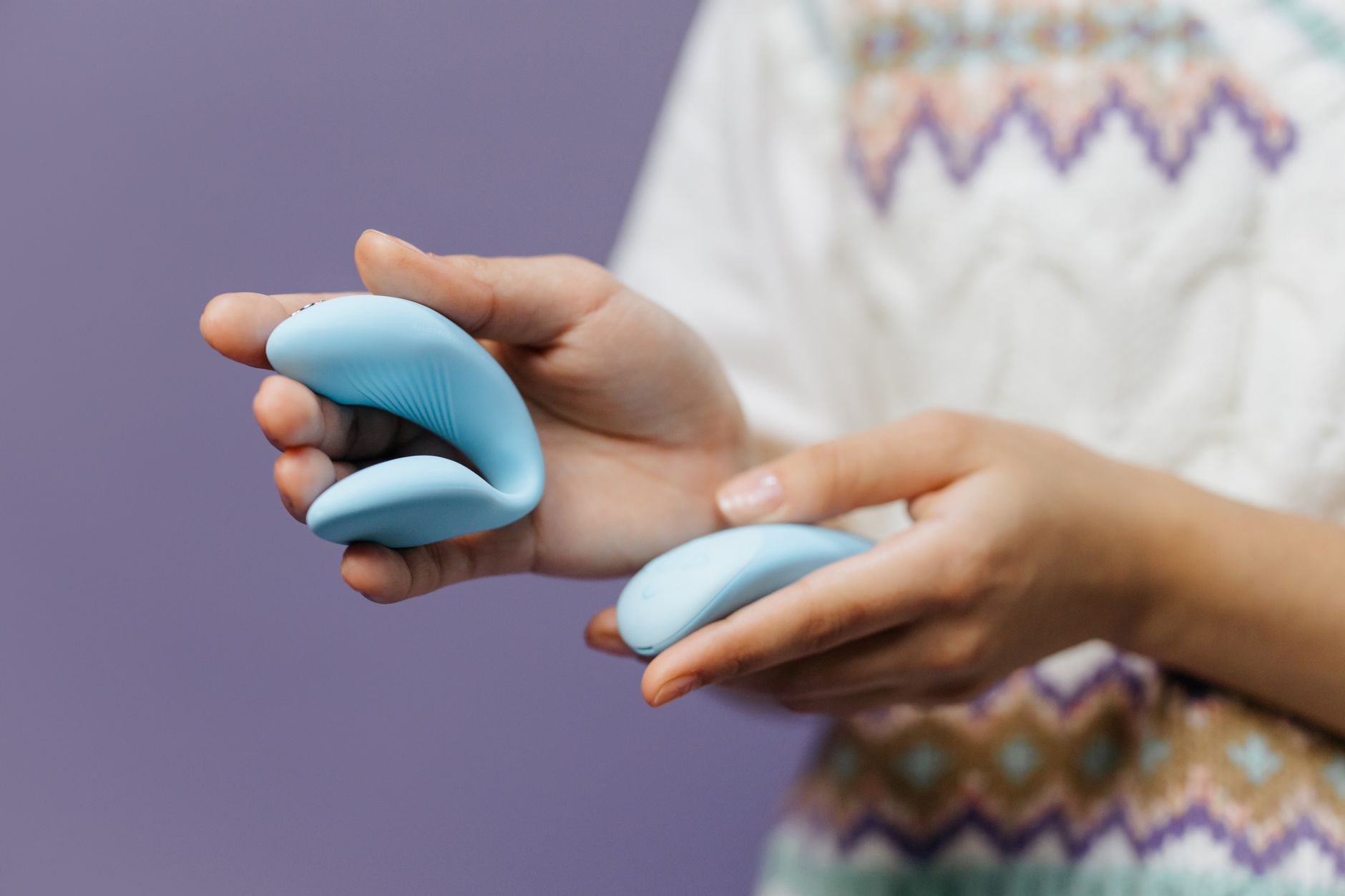
Photo by cottonbro studio on Pexels
The integration move: using a lemon vibrator as foreplay, not the main event
One of the clearest ways to signal that solo pleasure isn't a rejection of partnership is to structure it as part of the larger experience. Use your lemon sucker during foreplay, get yourself to the edge, then switch to partnered sex.
This does two things. First, it tells your partner "This is making me more aroused, and I want to bring that into what we're doing together." Second, it actually changes the physical experience. You're more responsive, you climax faster, the whole thing is more intense.
I've watched this shift couples' entire dynamic. Suddenly the toy isn't a threat to connection. It's a tool that deepens it. Your partner sees you more aroused, more present, more in your body. They get to feel that with you.
If your goal is to climax during partnered sex but you need clitoral stimulation to get there, a lemon vibrator + penetration combo is also fair game. The lem vibrator is shaped and sized so you can use it while being with your partner. That's not solo anymore. That's integrated.
What to say when your partner resists
Sometimes a conversation doesn't land the first time. Your partner says things like, "I feel like you don't want me," or "Why do we need a toy if we have each other?" or worst of all, they go silent.
Don't defend the toy. Address the fear.
"I hear that it feels like I'm rejecting you. That's not what this is. I'm actually trying to give myself, more fully, to you. When I'm frustrated because I can't climax, we both lose. When I climax, we both win. This is about us." Repeat that. Not defensively, just matter-of-fact.
If they're worried you don't want them, touch them more, not less. Show them. Make it clear that a tool that helps your pleasure is not the same as a partner you're choosing over them. Because there's a difference, and your partner deserves to feel that difference in your body and your attention.
If they think toys are artificial or "cheating," you might say: "A lemon vibrator is just technology that makes my body feel good, the same way a shower or a massage does. It's not replacing how I feel about you. It's helping me be present with you."
But if your partner consistently refuses to engage or consistently makes you feel ashamed of your own body's needs, that's a different conversation. That's a respect conversation. And that one might need a therapist, not a toy guide.
The real issue hiding underneath
Most couples friction about solo pleasure isn't actually about the toy. It's about feeling seen, wanted, and capable. If your partner feels like they're failing in bed, no amount of reassurance will land. They need to experience something different.
That's why I often recommend couples explore lemon vibrators together, not separately. Not because your partner needs to use it on themselves, but because collaborating on something new reminds you that you're on the same team.
You can research toys together. You can laugh about the names. You can try different sensations. You can ask each other questions without the pressure of "Does this thing mean you don't love me anymore?"
Suddenly it's not him and you and the toy. It's the two of you, figuring something out together. That's the conversation that heals.
The long view: solo pleasure as a way to stay connected
Here's something that might surprise you: couples who integrate solo pleasure into their relationship often have stronger long-term intimacy. Why? Because each person stays curious about their own body, which means they stay excited about sex, which means they bring that excitement into partnership.
If you only ever receive pleasure from your partner, you become dependent on them for your arousal. That's a lot of pressure. You start blaming them when sex isn't working, instead of diagnosing what your body actually needs.
When you use a lemon vibrator on your own and understand exactly what gets you there, you can collaborate with your partner from a place of knowledge instead of frustration. "I work best with clitoral suction, so let's figure out how to make that part of us" is a totally different conversation than "Why doesn't your touch work anymore?"
The couples I work with who get this right end up more connected, not less. Because they stopped pretending sex is supposed to happen one way, and started building something true.
Frequently asked questions
Why do lemon clitoral vibrators feel less intimidating to partners than traditional vibrators?
Suction toys are quieter, more intuitive to watch, and don't require intense mechanical stimulation. They feel less clinical and more like an extension of touch. Plus, the visual feedback of what's happening makes them seem less mysterious. Your partner can actually see what sensations you're experiencing, which paradoxically makes them feel more included, not less.
Should I hide my lemon vibrator if my partner isn't ready to know about it?
No. Secrecy builds shame and distance. That said, there's a difference between hiding something and timing a conversation. If your partner isn't ready to talk about it today, that's fair. But set a specific time to bring it up. "I want to talk about something that matters to me. Can we do that this weekend?" Sneaking around erodes trust way more than an awkward conversation ever will.
Can we use a lemon vibrator during partnered sex without it feeling like a threat?
Absolutely. In fact, integrating it during foreplay or penetration is one of the clearest ways to show it's not a solo thing. When your partner sees you more aroused and responsive because of the toy, they often become its biggest advocate. You're not choosing the toy over them. You're choosing pleasure that happens to include them.
What if my partner says "If you need that, I'm not satisfying you"?
That's about their insecurity, not the reality of your body. Your clitoris isn't a referendum on your partner's skill. Some bodies need suction. Some need direct pressure. Some need both in sequence. These are biological facts, not judgments about your relationship. You might say: "My body works a certain way. That's not about you. And I want to experience pleasure fully, with you here. That's what this is actually about."
Is it weird to ask my partner to watch while I use a lemon vibrator?
It's only weird if you make it weird. Frame it as something intimate you're inviting them into: "I want you to see what makes me feel good. I want you here while I explore this." Vulnerability is a bridge. When you let your partner witness your pleasure, you're actually deepening connection, even though it might feel exposing at first.
How do I know if my partner will ever be comfortable with this?
You ask. Directly. "Is this something you think you could get comfortable with over time? What would help?" Some partners need education. Some need time. Some need to see it in action. And some will never be comfortable, and that's information you need to know. You can't negotiate someone into comfort, but you can create the conditions for it.
The bottom line
Using a lemon vibrator as a solo person is one thing. Using one while you're in a relationship is a conversation, a negotiation, and ultimately an invitation. When you approach it that way, you're not choosing between yourself and your partner. You're choosing yourself, with your partner there. That's the difference between something that divides and something that connects.
The tools matter. But the communication matters more. Start there.