Here's the thing nobody talks about
You can have great partnered sex and still crave something completely different alone. Not because something is wrong. Not because your relationship is broken. Just because your body has needs that one person, no matter how attentive, can't always fill in the moment.
Maybe your partner comes faster than you do. Maybe penetration feels good but doesn't get you where you need to be. Maybe you want an intensity or a rhythm or a type of stimulation that doesn't fit into what you two do together. Maybe you just want something that's entirely yours, on your timeline, with zero negotiation.
That's not selfish. That's actually the foundation of good partnered sex.
The bridge between partnered and solo pleasure
A lot of people assume those two experiences should be the same. They're not, and they shouldn't be. Partnered sex is a duet. Solo pleasure is a solo. The fact that one feeds the other doesn't mean they're identical.
When you explore solo pleasure seriously, you learn your own body's language. You discover what actually works for you, separate from your partner's rhythm, separate from their preference, separate from the performance angle that shows up even in the healthiest relationships. Then you can bring that knowledge back into partnered sex and actually communicate it.
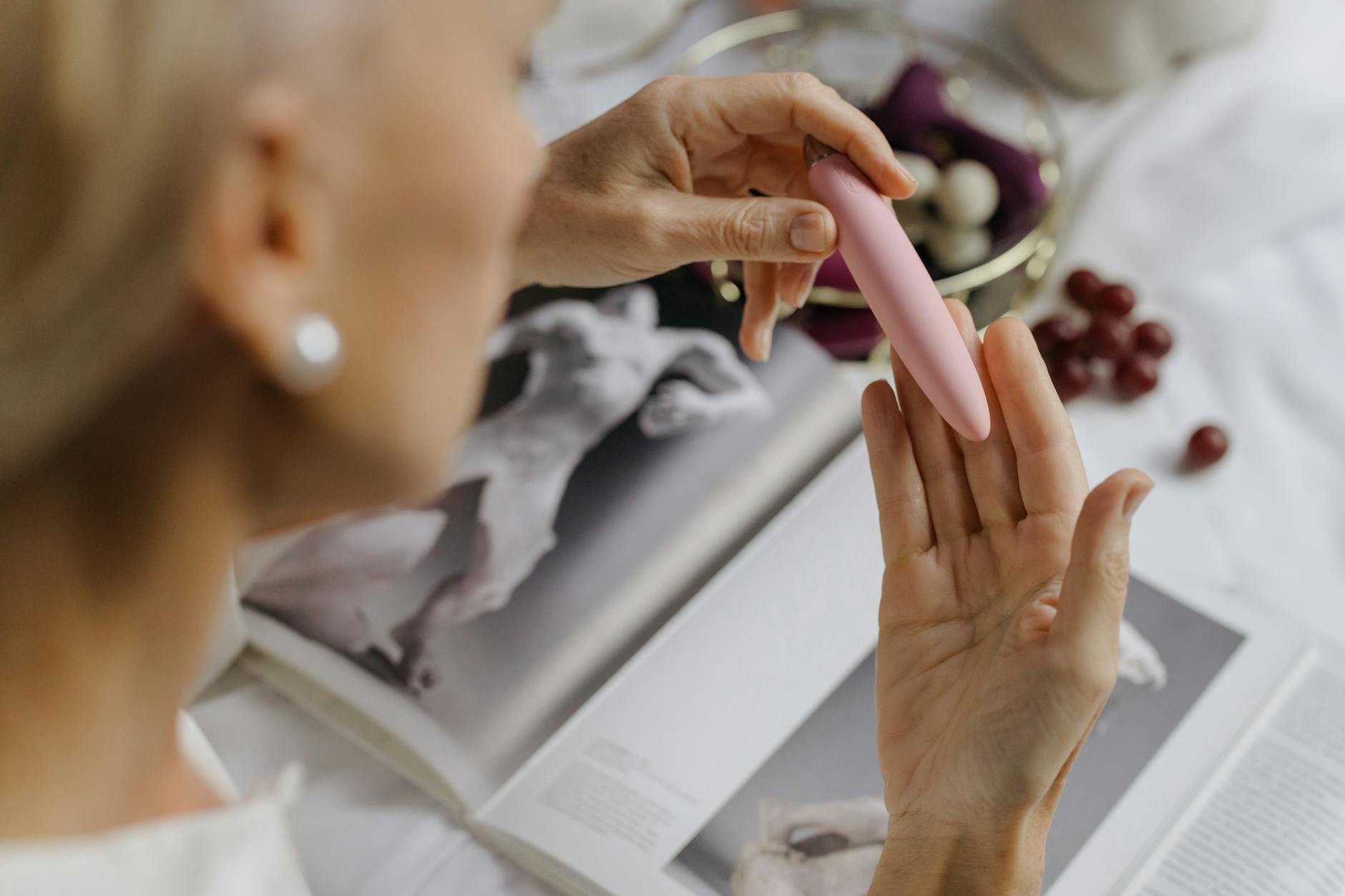
Lemon clitoral vibrators, especially ones that use suction technology like The Lemon Suction Toy, are particularly good at this because they create a completely different sensation than most partnered sex does. They're not trying to replicate penetration. They're not mimicking a partner. They're just focused entirely on what your clitoris responds to, which is different every single time.
Why clitoral vibrators change the conversation
Your clitoris has 8,000 nerve endings concentrated in a space the size of a pea. That's 8,000 reasons why what works for your whole body during partnered sex might not hit the same spot solo.
Partners, even incredibly attuned ones, are working with limited access and a different angle. They're also carrying their own arousal, their own timing, their own needs. None of that is bad. It's just not the same as you, alone, with a tool designed specifically for clitoral stimulation.
Clitoral vibrators like the lemon sexual toys work because they:
Focus entirely on clitoral pleasure without competing demands. Your partner's pleasure, your comfort as a receptive partner, the coordination of penetration, the heat of another body. None of that is present. It's just you and the sensation.
Allow you to discover your own rhythm. Partnered sex has a shared rhythm, which is beautiful. Solo pleasure lets you find out if you actually like that rhythm or if you've just been accommodating it.
Give you control over intensity and pattern. With a partner, intensity builds together. With a lemon vibrator, you control every aspect from the first touch.
Create a learning experience. Every time you use a clitoral vibrator solo, you're essentially giving your brain and body new data about what you respond to. That data travels directly into your next partnered encounter.
The emotional piece that matters more than the physical
Here's where it gets real. A lot of people feel guilty about wanting solo pleasure when they're in a relationship. They worry it means they're not satisfied, or they're being unfaithful in some weird way, or they're admitting their partner isn't enough.
None of that is true. And here's the thing that actually helps: solo pleasure isn't about your partner at all. It's not a judgment on your relationship. It's about your body having a conversation with itself that your partner literally cannot be part of, and that's okay.
In fact, when you can separate the two things emotionally, partnered sex often gets better. You stop asking your partner to be your orgasm, your validation, your proof that you're desirable. You handle that yourself. Then what you two share is just... sharing. Which is lighter. Better.
How to actually make space for both
The practical piece is simple. You need a few things:
One: a tool that works for you. A lemon clitoral vibrator isn't just a novelty. It's a tool designed to do one thing really well. If you're new to suction technology, start with how to choose a lemon vibrator if you've never tried suction before so you understand what you're working with.
Two: actual time and privacy. Not rushed, not interrupted. This doesn't have to be an hour. 15 minutes of uninterrupted focus on your own pleasure is worth more than a hurried encounter that feels like you're checking a box.
Three: permission, internally. This is the hardest part. If you're carrying guilt or fear around solo pleasure, that's a relationship issue, not a sex issue. It might be worth sitting with a therapist or counselor. But the short answer is: your pleasure belongs to you. Full stop.
The conversation with your partner
If you're in a relationship and you want to explore solo pleasure more intentionally, tell your partner. Not as a confession. Not with apology in your voice. As information.
"I want to spend some time exploring solo pleasure because I think it'll actually help our sex life. I'll have better information about what I respond to, and I'll feel less pressure in partnered sex because I'm not trying to fix my pleasure through you."
Most partners actually find this a relief. It means less pressure on them to be the source of your orgasm. It means you're taking responsibility for your own pleasure instead of making it their job.
If your partner reacts badly to that, that's worth examining. That's not about you wanting a clitoral vibrator. That's about control, or insecurity, or ideas about ownership that don't serve either of you.
What changes when you start exploring seriously
After a few weeks of intentional solo pleasure exploration, most people report:
Better communication in partnered sex. You actually know what you want because you've felt it solo.
Less performance anxiety. The goal isn't to orgasm on schedule anymore. The goal is to explore what feels good.
More confidence. Owning your pleasure is deeply sexy. Your partner will feel the difference.
Different kinds of pleasure. Sometimes partnered sex becomes more about connection than orgasm, which can actually feel better.
The connection back to partnered pleasure
One more important thing: solo pleasure and partnered pleasure aren't separate worlds. They're complementary. What you learn alone directly feeds what you can experience together.
Maybe you discover that you actually love firm, consistent rhythm and that your partner has been varying things too much. Maybe you realize you want more time on the clitoris before any penetration. Maybe you find out that you like a specific pattern or speed that your partner can replicate with their hand or with toys together.
All of that becomes material for partnered sex. You go from guessing, or accommodating, to actually knowing. And that's the whole game.
FAQ: Solo pleasure and your sex life
Does using a vibrator solo make partnered sex feel less intense?
Sometimes, at first. Your nervous system gets used to a new sensation. But that settles. What usually happens is you learn to enjoy different types of intensity. Solo pleasure is often very direct and focused. Partnered sex is more diffuse. Both are good. They're just different channels.
Should I tell my partner I'm using a lemon vibrator solo?
That depends on your relationship style. If you share everything, yes. If you have some privacy boundaries around solo pleasure, that's also valid. The only rule is: don't hide it from shame. There's a difference between privacy and secrecy.
What if my partner asks to join in or wants to use it on me?
That's a separate conversation and a separate experience. Solo pleasure is solo for a reason. If you both want to explore lemon suction toys together, that's beautiful, but it's not the same as what you need alone. You can do both.
Can solo pleasure actually improve partnered sex?
Absolutely. When you know your body, you can guide your partner better. When you're not relying on them for your pleasure, the pressure comes off. When you're confident in your own arousal, that confidence is contagious. All of it makes partnered sex better.
Is it normal to want solo pleasure even when I have a good partner?
Completely normal. Your body has needs that exist independently of your relationship. That's biology, not a relationship problem. The healthiest couples understand this.
How often should I be exploring solo pleasure?
Whatever feels right for your body and your life. There's no quota. Some people benefit from a few times a week. Some prefer less frequently. The point is intentionality, not frequency.
The bigger picture
Your sexuality doesn't exist only in partnered contexts. It's yours. Solo pleasure isn't a supplement to partnered sex or a backup plan. It's a complete part of your sexual life, and it deserves the same attention and respect you give to anything else that matters to you.
When you make space for solo exploration, you're not taking anything away from your relationship. You're actually investing in it. You're becoming more confident, more aware, more capable of communicating what you need. Everything that follows from that is better.
Start small if you're new to this. Give yourself permission to explore without judgment. And remember: your pleasure is not a luxury. It's a fundamental part of being alive in your body.
Sources
Masters, W. H., & Johnson, V. E. (1966). "Human Sexual Response." Little, Brown & Company.
Kommission, O. (2020). "Understanding Female Pleasure: Neuroscience, Sexuality, and Well-being." Journal of Sexual Medicine.
Rosenberg, K. P., Carnes, P., & O'Connor, S. H. (2014). "Principles and Practice of Sex Therapy." Guilford Press.