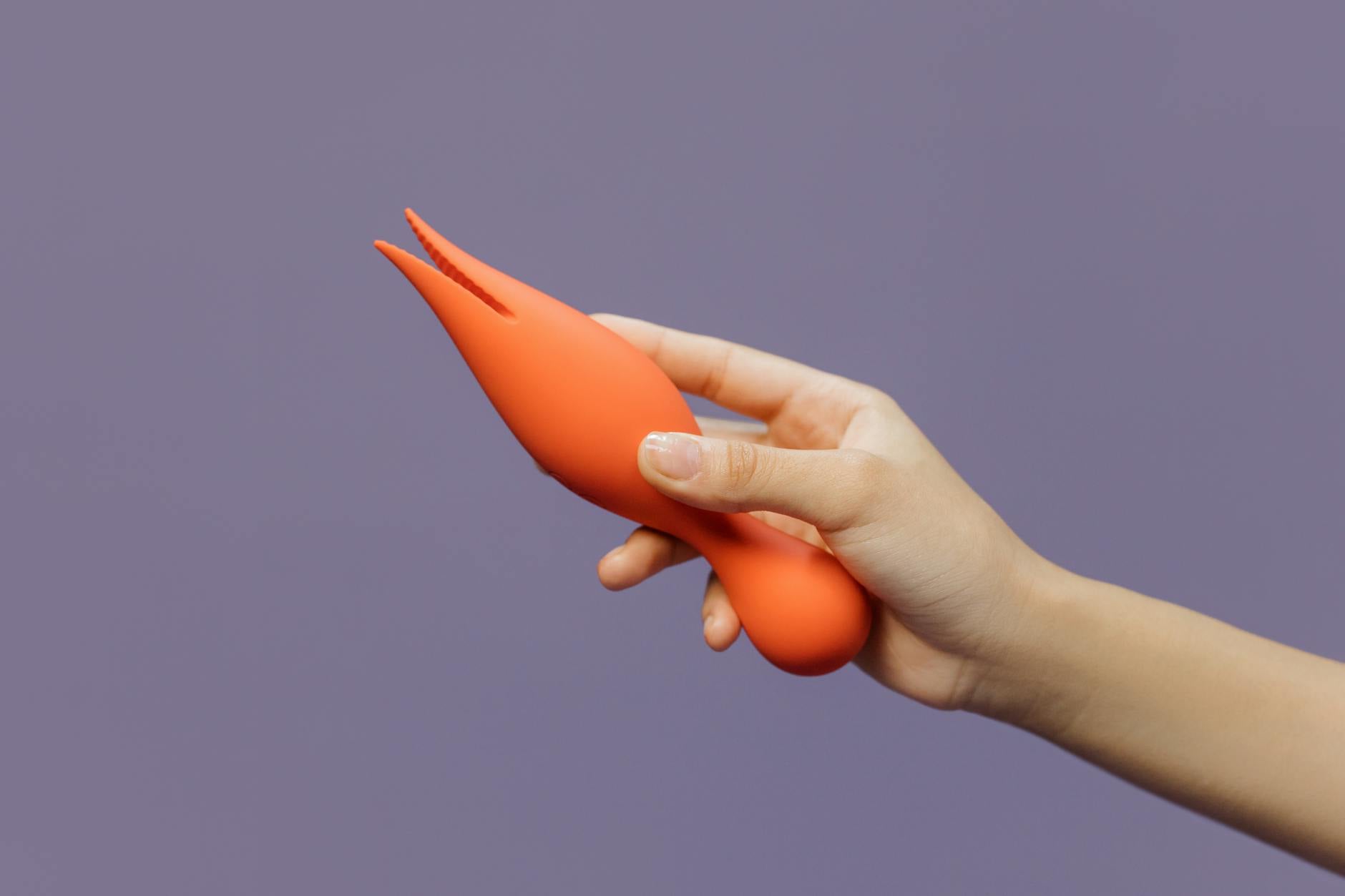
Let's start with what vaginismus actually is
Vaginismus is an involuntary tightening of the pelvic floor muscles that makes penetration feel painful, difficult, or impossible. It's not psychological, even though stress can trigger it. It's not a sign you don't want sex. It's a reflex your body learned, and like any reflex, it can be unlearned.
Here's what most people don't understand: vaginismus doesn't affect clitoral sensation at all. Your clitoris is not involved in that muscle tension. Which means pleasure is still completely available to you, even when penetration feels blocked.
That's the entry point where lemon vibrators help.
Why clitoral pleasure matters when penetration feels off the table
When penetration is off the table due to vaginismus, clitoral stimulation becomes not just pleasurable but therapeutic. It rewires the nervous system's associations with sex and touch. Instead of anticipating pain, your body starts to remember what pleasure feels like in a space where pain doesn't exist.
This isn't a workaround. This is the actual healing pathway.
Many people with vaginismus spend months or years in pelvic floor physical therapy without ever exploring pleasure during that recovery. The assumption is that pleasure comes later, after the problem is solved. But pleasure is the solution. It teaches your nervous system that touch doesn't have to hurt.
How lemon clitoral vibrators work differently than other toys
Most vibrators use rapid oscillation. Lemon vibrators use suction and pulse patterns that feel less direct and intense. This matters when you're working with a nervous system that's learned to brace against sensation.
With a traditional vibrator, you're adding stimulation on top of an already-activated pelvic floor. With a lemon clitoral vibrator, you're creating a gentler, more rhythmic sensation that actually helps the pelvic floor relax rather than contract further.
The suction mechanism feels almost meditative. It's rhythmic. It's not harsh. And most importantly, it doesn't trigger the same protective tension response that direct vibration sometimes can.
Starting solo before partnered exploration
If you're dealing with vaginismus and considering using lemon vibrators, start alone. No pressure, no performance anxiety, no timing concerns. Just you and your body learning what feels good again.
Set aside 15 to 20 minutes in a private space. Warm up your body first. The pelvic floor relaxes better when you're not cold or stressed. Some people find that a warm bath or shower beforehand helps.
Start on the lowest setting. The Lemon Clitoral Vibrator has multiple patterns, but honestly, the gentlest setting is where most people with vaginismus start. Explore which pattern feels best. You're not trying to reach orgasm on this first session. You're just reintroducing your body to sensation without pain.
Water-based lubricant helps, not because you need it for clitoral work, but because it reduces friction and helps the suction mechanism feel smoother. And smoother means less triggering.
Why the nervous system shifts faster than you'd expect
Vaginismus is a protective response. Your body is guarding against something it perceives as dangerous. That protective response doesn't disappear overnight, but it does shift when pleasure starts happening in a safe context.
After a few solo sessions with a lemon clitoral vibrator, many people notice their pelvic floor feels less rigid in general. Not just during sex. During daily life. That's the nervous system updating its threat assessment.
You're essentially creating a new neural pathway. Every time you use the vibrator without pain, your brain registers that as evidence that touch can be safe. Over time, that evidence accumulates and the protective tension softens.
This is why how lemon vibrators help when you want pleasure after pelvic floor physical therapy is such a powerful combination. Therapy addresses the mechanics. Pleasure addresses the nervous system.
Introducing it to a partner (if you want to)
If you have a partner and you're ready to bring them into this, the conversation starts outside the bedroom. Not "I want to use this during sex." Just "I've been exploring something that helps me feel better, and I want to share it with you."
Many partners feel relief hearing this. They've often felt helpless during vaginismus. Being invited into your healing feels like partnership again.
Start with the same gentleness you used solo. Let your partner hold the lemon clitoral vibrator. Let them see how you respond. This is about building trust and comfort, not about reaching any particular goal.
Some couples find that this becomes part of their regular intimacy, penetration or not. Some use it as foreplay. Some discover that clitoral pleasure is actually what they both prefer. There's no endpoint you're trying to hit.
What to expect timeline-wise
Vaginismus doesn't resolve in a week. But you'll notice shifts faster than you'd expect. Many people report that after 3 to 4 weeks of regular solo exploration with a lemon clitoral vibrator, the baseline pelvic floor tension has noticeably decreased. Not gone. Decreased.
After 6 to 8 weeks, some people find they can tolerate penetration, even if they don't want it. Others find they prefer clitoral pleasure and decide penetration isn't actually necessary for them. Both are wins. Both are progress.
The key is consistency. Two or three sessions a week, same time of day if possible, gives your nervous system a clear message. Your body learns patterns. Make pleasure a pattern, and vaginismus becomes less of an automatic response.
When to see a pelvic floor physical therapist alongside this
Lemon vibrators are not a replacement for pelvic floor physical therapy. They work best alongside it. A PT will teach you breathing techniques, tension release exercises, and gradual desensitization protocols that work with what you're doing at home with the vibrator.
The combo is powerful because they address different aspects of the same problem. PT addresses the mechanical tension. The vibrator addresses the nervous system's relationship with pleasure. Together, they accelerate recovery.
If you haven't worked with a pelvic floor PT yet and vaginismus is significantly impacting your quality of life, that's the first step. Then add clitoral vibrator exploration once you've learned the basics of pelvic floor relaxation.
The mental shift that matters most
Honestly, the biggest thing that changes isn't physical. It's permission. When you're struggling with vaginismus, there's often shame wrapped around it. Shame that your body isn't cooperating. Shame that you can't have "normal" sex. Shame that you're letting your partner down.
Using a lemon clitoral vibrator sends a message to yourself: my pleasure matters. Not someday, when this is fixed. Now. In this body. With this nervous system. That mindset shift is where the real healing begins.
People also ask
Can you use a lemon clitoral vibrator if penetration is completely impossible right now?
Yes. Clitoral pleasure has nothing to do with penetration. Your clitoris is above the vaginal opening. The pelvic floor tension that blocks penetration doesn't affect clitoral sensation. If anything, focusing on clitoral pleasure first gives your nervous system permission to relax, which sometimes makes penetration easier down the line. But that's a side benefit, not the goal.
How often should you use a lemon vibrator when dealing with vaginismus?
Two to three times per week is a solid baseline. More is fine if it feels good. The consistency matters more than the frequency. Your nervous system responds to reliable patterns. Pick times that work and stick with them. Many people find evening works better because there's less stress pressure. But morning can work too if that's your life.
Does using a vibrator make vaginismus worse?
Not if you start gently and listen to your body. The risk is pushing too hard, too fast, or using a toy that's too intense. That's why lemon clitoral vibrators are particularly well-suited to vaginismus recovery. The suction mechanism is gentler than direct vibration. Start on the lowest setting. If anything feels triggering, pause and come back to it later. Your body will tell you what it's ready for.
Is it normal to feel tense even while using a lemon vibrator?
Completely normal. Vaginismus is an automatic reflex, and reflexes don't just disappear because you want them to. You might feel some pelvic floor activation even during pleasure. That's not failure. That's your nervous system gradually learning that touch doesn't require protection. Keep going. The tension will soften with time and consistency.
Can you use a lemon clitoral vibrator with a partner during penetrative attempts?
Yes, and many couples find this helpful. Using the vibrator during attempted penetration gives your nervous system pleasure signals at the same time it's working on relaxation. This creates a different context for your body. Some couples use it as foreplay before attempting penetration. Others use it during, as a source of pleasure independent from what's happening with penetration. Experiment and see what feels right.
What if you've had vaginismus for years and nothing has worked?
Longer vaginismus history means your nervous system has had more time to build protective patterns, but it also means you have time. There's no expiration date on this. The approaches that work are the same: consistent, gentle exposure to pleasure in a safe context, usually combined with pelvic floor physical therapy. Many people find that the combination approach finally breaks through after years of nothing working. Give yourself at least 8 to 12 weeks of consistent exploration before deciding whether it's working for you.
The actual path forward
Vaginismus can feel like your body has betrayed you. Like pleasure is something other people get to have, but not you. That's not true. Your clitoris works. Your nervous system can learn. Pleasure is still available, it just needs a different entry point.
Lemon clitoral vibrators create that entry point. They're gentle enough not to trigger protective tension, rhythmic enough to help your nervous system relax, and consistent enough to rewire the associations your body has built around touch and sex.
Start solo. Go slow. Be consistent. And let your body surprise you with what it's actually capable of when you stop demanding penetration and start exploring pleasure exactly as it's available to you right now. That's where healing happens.