Let's talk about the arousal gap
You want pleasure. Your mind is genuinely interested. Your partner is ready. And then your body doesn't show up the way you expect it to. This isn't a desire problem. This is an inconsistent arousal problem, and it's wildly more common than anyone admits.
Inconsistent arousal means your physical response doesn't sync with your mental desire. Sometimes you warm up in minutes. Other times the same touches that worked last week do absolutely nothing. You're not broken. Your arousal is just variable, and that variability can feel frustrating, confusing, or even like you're failing at sex.
Why arousal isn't a straight line
Here's what most people get wrong about arousal: they treat it like a light switch. Flick it on, it goes on. Real arousal doesn't work that way. It's more like a dimmer with about fifteen variables controlling it at once.
Physically, arousal depends on blood flow, hormone levels, nerve sensitivity, and pelvic floor tension. Psychologically, it depends on stress, attention, anxiety about performance, how you feel about your body that day, whether you're worried about work, if you've eaten enough, and whether you trust your partner enough to fully relax. Add in the fact that all these variables shift daily, sometimes hourly, and you get inconsistent arousal.
This is especially true if you've experienced trauma, if you're on hormonal birth control, if you're in a period of high stress, or if you're someone whose arousal has always been a bit slow to build. Some bodies just have a less predictable on-ramp, and that's not a flaw. It's just how you're wired.
The shame piece nobody mentions
Inconsistent arousal often comes with a side dish of shame. You internalize it as "something's wrong with me" or "my partner isn't turning me on anymore" or "I'm just not a sexual person." None of those things are usually true. What's happening is more mechanical than that.
When you're anxious about arousal showing up, your nervous system goes into a low-grade fight-or-flight state. That state actively prevents arousal. So you end up in a loop where the worry about inconsistent arousal makes arousal even less likely. The harder you try to force it, the more elusive it becomes.
Breaking that loop requires two things: permission to stop chasing arousal on a schedule, and a practical tool that doesn't depend on your body cooperating perfectly.
How lemon clitoral vibrators address the gap
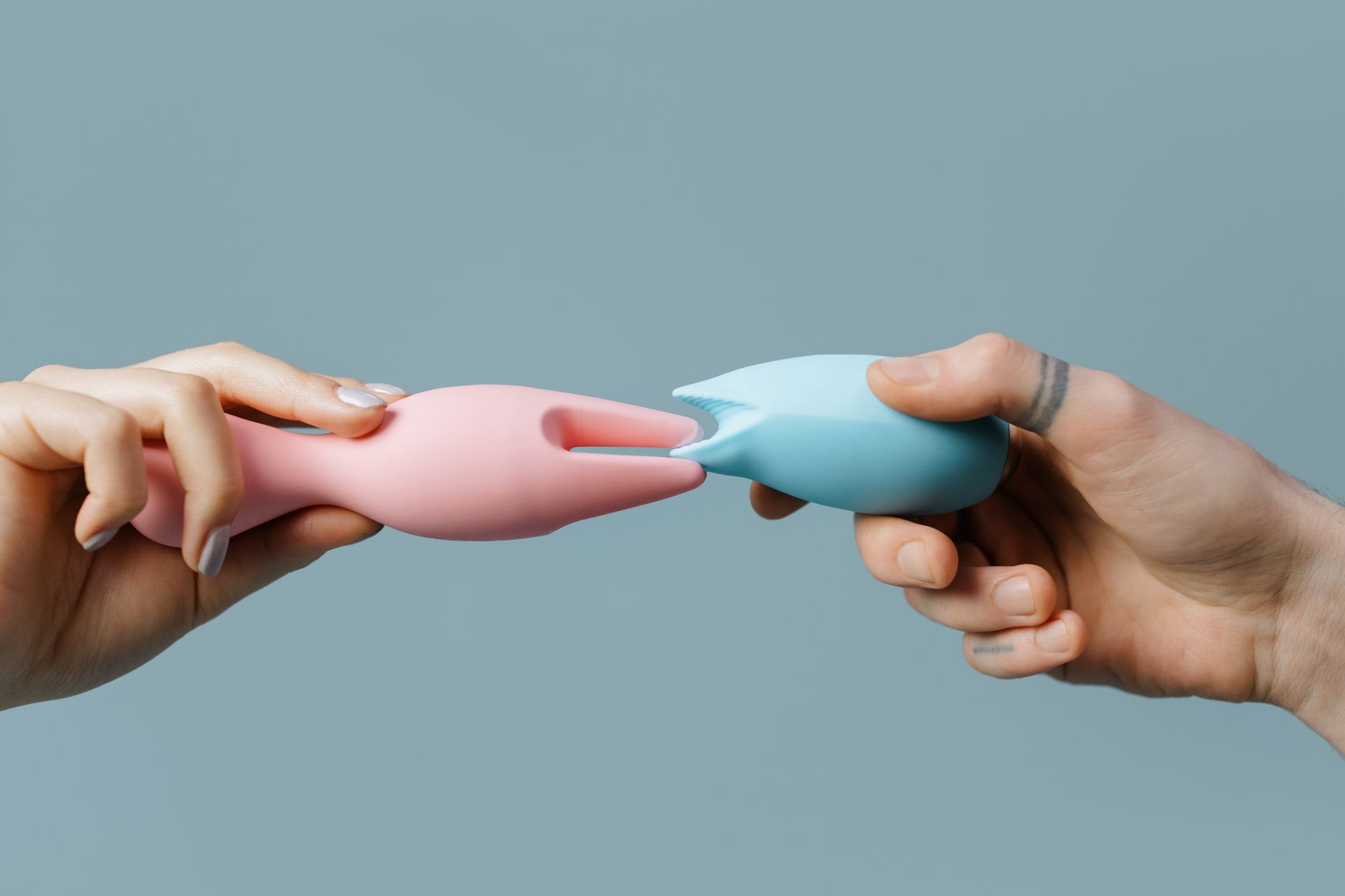
Lemon vibrators, especially air-suction models like The Lem, work differently than traditional vibrators. Instead of requiring your body to already be aroused, they create arousal through direct, sustained stimulation that your nervous system registers as pleasure regardless of where you're starting from.
This matters because the clitoris has about 8,000 nerve endings, and suction stimulation activates a different neural pathway than vibration alone. When arousal is inconsistent, what you need isn't a toy that rewards arousal. You need a tool that creates it.
Many people find that a few minutes with a lemon sucker jump-starts the physical response that their minds wanted all along. You're not forcing anything. You're just giving your body a more direct input signal, and sometimes that's all you need to bridge from "interested" to "actually turned on."
The variable arousal timeline
Inconsistent arousal often means your timeline is longer or less predictable than you'd like. Where you might warm up in 5 minutes one evening, the next time it takes 20. That length variation causes people to give up or feel like something's broken.
The advantage of lemon vibrators is that they work at their own pace, independent of your arousal curve. You can use one while you're still in the early, uncertain phase of desire. By the time you've shifted mental gears or your partner is ready, your body has already started responding. It's not about forcing arousal. It's about removing the pressure of that response showing up on a specific timeline.
If you're also dealing with inconsistent sensitivity or numbness during arousal, suction provides consistent external input that doesn't depend on your tissue sensitivity being perfect in the moment.
Inconsistent arousal and relationship dynamics
One of the sneakiest parts of variable arousal is how it affects your relationship. If your arousal is unpredictable, you might hesitate to initiate sex because you're not sure you can "deliver." Your partner might feel rejected or worry that you're not attracted to them anymore. Neither of those stories is usually true.
Having a practical tool that helps you meet your own desire halfway removes a lot of that pressure from your partnership. If you can say "my arousal runs slow tonight, but this helps" instead of "let's just skip it," you get to keep pleasure in the relationship without performing arousal on command.
This is one of the reasons couples often find that adding tools like lemon clitoral vibrators actually improves their connection. It's not about the toy. It's about removing a source of shame and uncertainty from your shared experience.
When inconsistent arousal signals something deeper
That said, inconsistent arousal sometimes points to something that deserves attention. If your arousal used to be more consistent and it's shifted, it could indicate hormonal changes, medication side effects, relationship stress, unresolved trauma, or changes in your physical health.
None of those things mean you should suffer through sex without pleasure. But they might mean it's worth checking in with a therapist or doctor to understand what's shifted. A lemon vibrator is an excellent tool for pleasure right now, but it's not a diagnosis or a replacement for care if something deeper is going on.
If your inconsistent arousal is accompanied by pain, significant anxiety, or a complete loss of interest in sex, that's worth professional attention. A good therapist or gynecologist can help you figure out whether this is just how your body works or whether something's changed.
Building arousal without pressure
One practical approach I often recommend is separating exploration from performance. Set aside time when you're just playing with sensation and arousal, without any expectation of reaching orgasm or proving that you can be turned on. Sometimes inconsistent arousal improves dramatically just from removing the pressure to perform.
During these sessions, a lemon vibrator gives you something external to focus on instead of monitoring whether you're "doing it right." You get to experience arousal as something that happens to you, rather than something you have to produce.
Many people also find that using a lemon clitoral vibrator solo helps them understand their own arousal patterns better. You can notice what helps, what doesn't, and how your body actually works when there's zero external expectation. That knowledge then translates into better communication with partners and less confusion about your own desires.
The flexibility factor
Variable arousal often means you need flexibility in how you approach sex and pleasure. Some nights you're ready to go. Other nights you need 30 minutes of foreplay and external help to get there. Both are normal.
The advantage of lemon adult toys is that they adapt to that fluctuation. On nights when arousal shows up easily, you might use one just for the sensation. On nights when you're starting from neutral, it helps bridge the gap. On nights when you're stressed and scattered, it gives you something concrete to focus on. The same tool serves multiple purposes depending on what you actually need.
People also ask
Is inconsistent arousal the same as low libido?
No. Low libido means you don't want sex frequently. Inconsistent arousal means you want it, but your body doesn't always cooperate on the timeline you'd prefer. You can have high desire and inconsistent arousal, or low desire with very predictable arousal when it does show up. They're separate systems. If your desire is fine but your physical response is variable, that's an arousal consistency issue, not a libido issue.
Can stress actually make arousal inconsistent?
Absolutely. When you're stressed, your nervous system prioritizes survival over pleasure. Your body literally diverts blood flow away from the genitals and toward larger muscle groups. Add in the mental load of stress, and arousal becomes harder to access. This is completely normal and not a sign of dysfunction. It's a sign that your nervous system is doing its job, even if that job is annoying when you want to have sex.
Does using a lemon vibrator make inconsistent arousal worse over time?
No. Some people worry that using external tools will make their body less responsive over time. The research on vibrator use doesn't support that. What you will notice is that your body becomes more responsive to the specific type of stimulation the toy provides. But your responsiveness to other types of touch usually stays the same. You're not training your arousal away from anything. You're just adding a tool to your repertoire.
How do I know if my inconsistent arousal is normal or worth seeing a doctor about?
If your arousal has always been variable, that's just your normal. If it's recently changed from being more consistent, that's worth mentioning to a doctor, especially if you've also changed medications, started hormonal birth control, or are in a different stress situation. If the inconsistency is affecting your quality of life or your relationship significantly, that's worth professional input too. A gynecologist or therapist can help you figure out whether this is a tool-and-communication issue or whether something physiological has shifted.
Can I use a lemon sucker if I'm not already aroused?
Yes, that's actually one of the main reasons people use them. You don't need to be aroused to start using a lemon clitoral vibrator. The stimulation itself often triggers arousal. That's the whole point for people with inconsistent arousal. You can use it as a bridge between desire and physical readiness.
Does inconsistent arousal mean my partner isn't attractive to me anymore?
Most of the time, no. Arousal inconsistency is rarely about attraction. It's usually about stress, hormones, nervous system state, or just how your particular body works. You can be wildly attracted to someone and still have a slow arousal ramp on a given night. Those two things don't have to be connected, even though our culture usually treats them like they are.
The bigger picture
Inconsistent arousal is one of those things that feels like a personal failing until you understand what's actually happening. Your body isn't broken. Your desire isn't wrong. You're just someone whose arousal works on a variable schedule instead of showing up perfectly on demand.
That's not something you need to fix. It's something you need to work with. And sometimes working with it means having better tools in your pleasure toolkit. A lemon clitoral vibrator isn't magic. But it does remove the pressure of waiting for arousal to show up on its own timeline and let you move forward with pleasure anyway.
If you're struggling with inconsistent arousal, you deserve pleasure on your actual terms. Not the terms your brain thinks you should have. Not the timeline you read about in magazines. Your timeline. Your body. Your pleasure. That's what matters.
Want to explore this more? Get in touch and let's talk about what might work for your specific situation.