Let's be real about pleasure and tension
You want to feel good. You absolutely want to. But somewhere between deciding to touch yourself and actually experiencing anything, the system hijacks itself. Your brain starts narrating. Your shoulders climb toward your ears. You notice you're holding your breath. And just like that, sensation flatlines.
This isn't a character flaw. This is what happens when your nervous system is stuck in a low-level threat response, and it's wildly common. The good news: lemon clitoral vibrators work specifically because they bypass the mental gate that's blocking you.
How anxiety actually blocks sensation
Here's the neuroscience bit, and I promise it's useful. Your nervous system has two modes: sympathetic (fight, flight, freeze) and parasympathetic (rest, digest, connect). When you're anxious, you're sympathetic-dominant. Blood flow goes to your limbs, not your clitoris. Cortisol spikes, which suppresses arousal neurotransmitters. Your pelvic floor tightens. Your skin becomes less sensitive to light touch.
Meanwhile, your mind is running commentary. "Is this taking too long? Am I doing this right? Why can't I just relax like everyone else seems to?" That internal monologue is a sympathetic-state superpower. It's designed to keep you scanning for threats. It's terrible for pleasure.
The problem isn't that you don't want to feel good. It's that your threat-detection system is louder than your pleasure-detection system.
Why sensation from lemon vibrators cuts through the noise
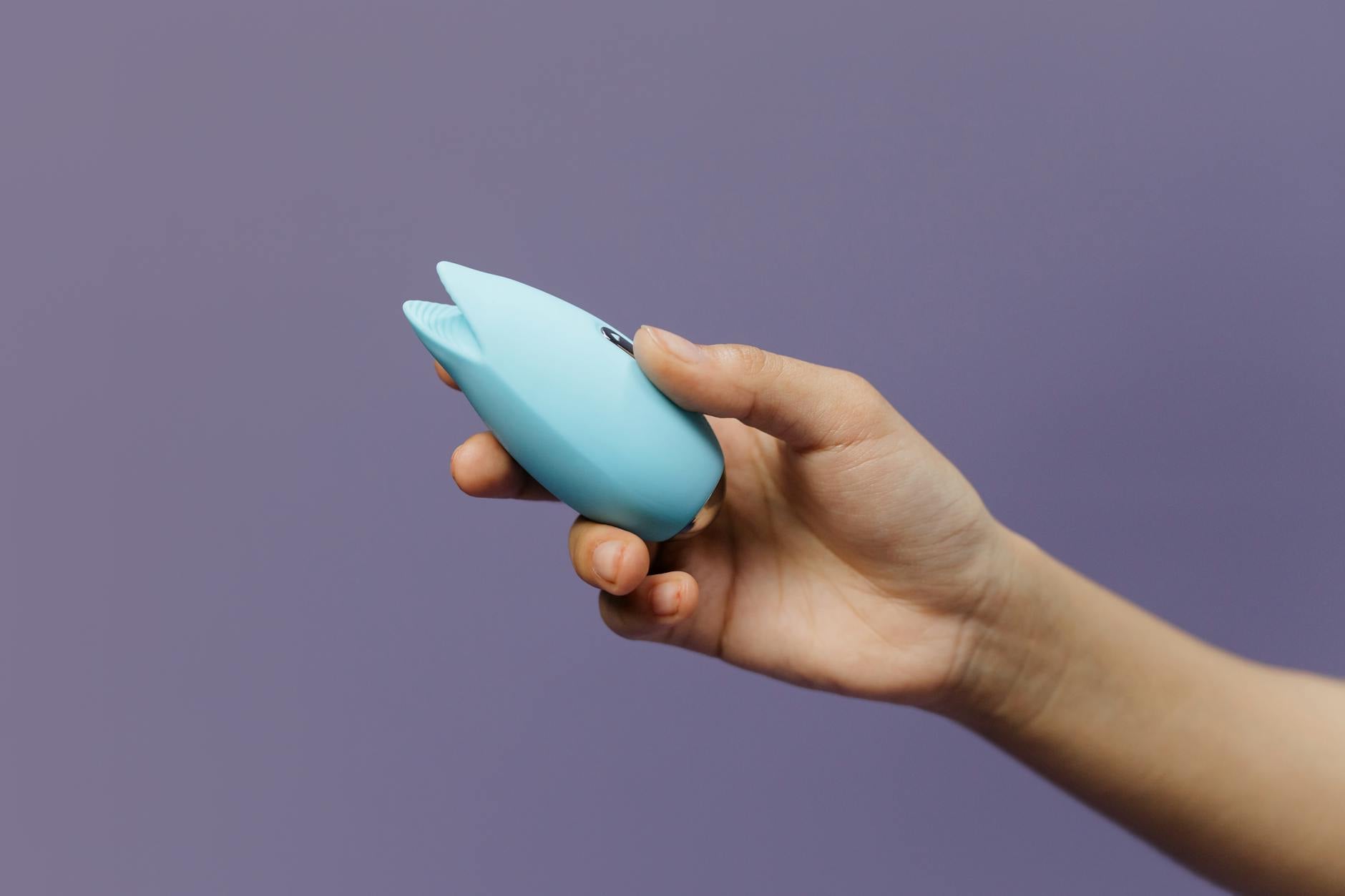
Lemon clitoral vibrators use suction and vibration in a very specific way. Instead of relying on the light-touch sensitivity that's offline when you're anxious, they create strong, rhythmic stimulation that's harder for an anxious brain to ignore or override.
Think of it like this. When you're stressed, whispered conversation won't register. But a consistent beat will. That's what lemon vibrators do neurologically. The patterned suction creates a signal so clear that your brain has to notice it, even if the rest of your nervous system is braced for disaster.
Second, the suction mimics the kind of oral stimulation that many people find easiest to feel when they're tense. There's no pressure on you to "do it right." You're receiving, not performing. That shift alone can soften the sympathetic response.
Three ways to set yourself up to actually relax
But here's the real move. A lemon clitoral vibrator won't do the work alone if you're still fighting yourself. You need to signal safety to your nervous system first.
Start with your body, not your mind. Before you touch yourself, take three breaths where the exhale is longer than the inhale. Four-count in, six-count out. This flips your nervous system parasympathetic. Your pelvic floor will soften. Your blood pressure will drop. This is not woo. This is vagus nerve activation.
Create genuine privacy, not just the absence of interruption. If part of your brain is listening for footsteps or your phone, you're still sympathetic. Lock the door. Put your phone in another room. Tell your partner you need an hour alone. The permission you give yourself matters more than any vibrator.
Use the vibrator as an anchor, not a goal. Most people approach pleasure like a project with a deadline. Turn on the lemon vibrator and focus on the sensation for its own sake, not as a means to an orgasm. Stay with one pattern for a while. Feel what it does to the tissues, the rhythm, the small shifts in intensity. This grounds you in sensation instead of striving.
What to expect the first few times
If you've been anxiety-blocked for a while, sensation might feel weird or even uncomfortable initially. That's normal. Your clitoris might feel numb, or it might feel overstimulated. Start at a lower suction level. Spend fifteen minutes just getting used to the feeling without expecting it to lead anywhere.
Many people find that after three or four sessions of just sitting with the sensation, something shifts. The anxiety loosens. Your nervous system learns that this is safe. Then pleasure starts to register in a way it couldn't before.
The partner element, if that applies
If you have a partner, using a lemon clitoral vibrator can be a solo practice first. That matters. You're learning that pleasure is something you can access on your own terms, without needing someone else to make it happen or validate it. This is how you rebuild trust in your own body.
Once you're comfortable solo, introducing it with a partner is different. You're not asking them to make you feel better. You're showing them a tool that works for you. That frame shift reduces performance pressure dramatically.
When to get actual help
If you've been using a lemon vibrator regularly for six weeks and sensation still isn't accessible, or if anxiety during sex is part of a larger pattern of panic or avoidance, talk to a therapist. Some people need both the vibrator and professional support to rewire the anxiety response. That's fine. That's actually smart.
Anxiety-blocked pleasure is real, and it's treatable. Lemon clitoral vibrators are one tool. A good nervous system practice is another. Permission to slow down is a third. Used together, they work.
FAQ
Does using a vibrator mean I'm not "normal" if I need it to feel anything?
Needing strong stimulation when you're anxious is neurologically normal. Anxiety dampens sensation. A lemon clitoral vibrator isn't a workaround for brokenness. It's a tool that matches your nervous system's current state. As anxiety decreases, your sensitivity often increases. The vibrator isn't forever. It's for now.
Can I get addicted to the vibrator and then stop being able to orgasm without it?
This is a myth. Your clitoris doesn't become "dependent" on any particular type of stimulation. What actually happens is that if a vibrator is the only tool that cuts through your anxiety, of course that's what works best. That's not addiction. That's matching the tool to the job. If your anxiety decreases through other work (therapy, meditation, relationship shifts), your pleasure response usually expands.
What if the vibrator feels too intense and makes me more anxious?
Start with the lowest suction setting. Some people who are anxiety-blocked actually need gentler initial input to build trust that touch is safe. You might also try using it over your underwear or through fabric first. The goal is sensation you can stay with, not intensity that shocks your system further.
How do I explain to a partner why I need a lemon vibrator if they think I should "just relax"?
Try this: "When I'm anxious, my nervous system goes into protection mode. My body literally can't feel lighter touch. A vibrator gives me stimulation that my anxious nervous system can actually register. It's not about you. It's about meeting my body where it is right now." Most partners understand when they learn it's biology, not preference.
Can I use a lemon vibrator while also working on the anxiety itself?
Absolutely. In fact, that's the ideal approach. The vibrator helps you access pleasure while you're also doing nervous system work through breathwork, therapy, or meditation. They support each other. One isn't a replacement for the other.
What if I've never been able to relax during sex, even before anxiety got worse?
Some people's nervous systems are just more alert by nature. You're not broken. You might benefit from exploring what "relaxation" actually means to you. For some people, it's not about melting. It's about feeling safe and focused. A lemon clitoral vibrator can be the thing that makes safe, focused sensation possible.