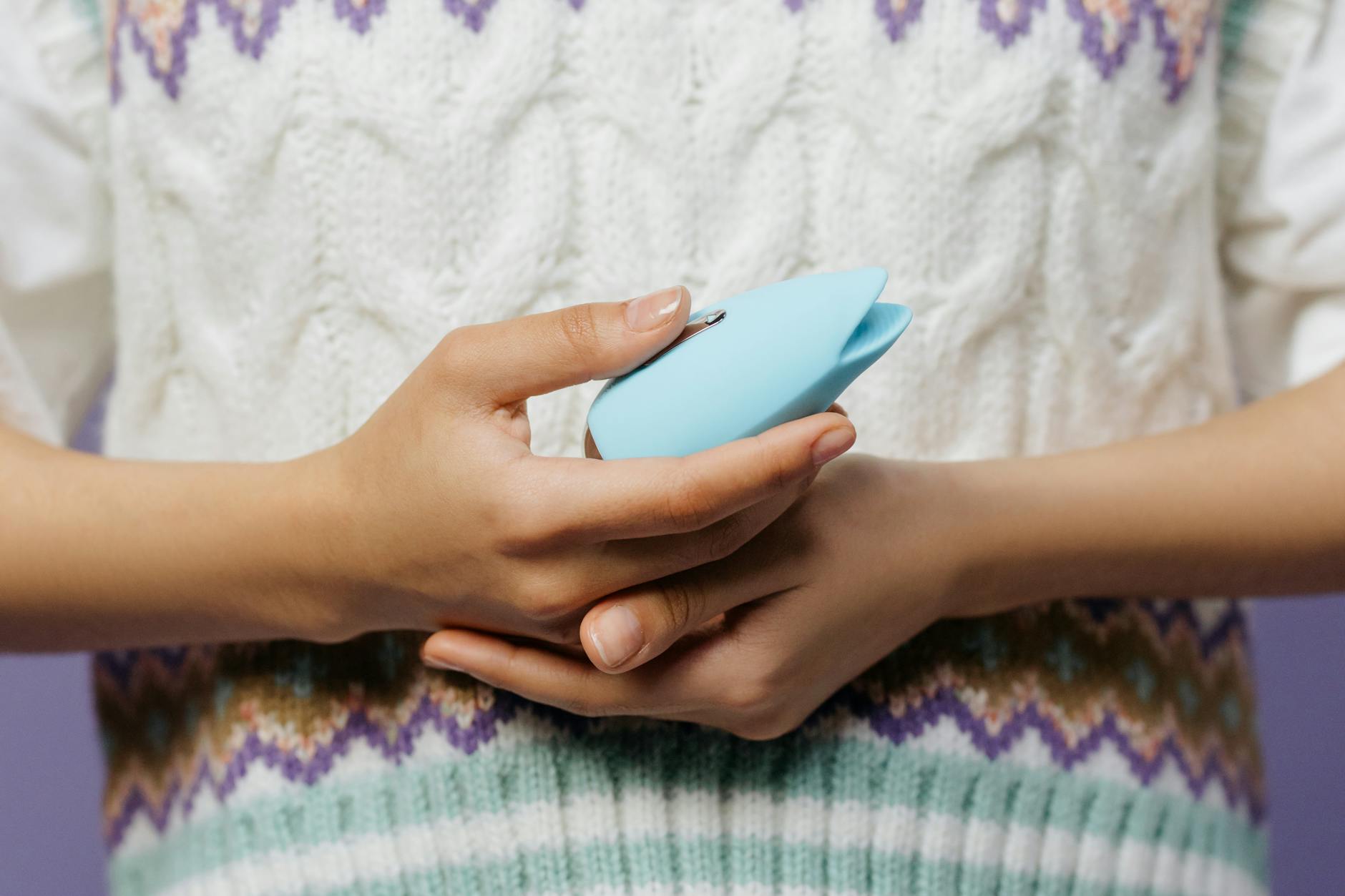
Let's talk about hypersensitivity after a pause
You haven't touched yourself in months. Life got messy, your body felt numb, your mind was elsewhere, or you were dealing with recovery of some kind. Now you're ready to come back to pleasure, and here's what happens: your clitoris feels almost raw. The stimulation that used to feel good now feels too sharp, too intense, almost painful. It doesn't make sense. Didn't you just want this back?
Yes. And your nervous system is also doing exactly what it's supposed to do.
Why sensation spikes after time away
Your clitoris contains roughly 8,000 nerve endings, and they haven't been getting regular input. After a prolonged pause, those nerves become what's called "upregulated." Think of it like turning the volume up on a speaker that hasn't been used. The first sound is too loud because the dial has drifted into oversensitive territory.
Additionally, the tissues around your clitoris may have experienced subtle changes in blood flow and natural lubrication. When you return to stimulation, the tissue swells more quickly than it did before the break, which intensifies the sensation.
Nerve endings also become more alert when they've been dormant. Your body isn't broken. It's just recalibrating.
The difference between rawness and damage
Important distinction: intense sensation is not the same as pain that signals harm. Rawness is a heightened sensitivity that usually settles as you build back your pleasure practice. Pain that's sharp, burning, or leaves you wincing afterward suggests either that you're moving too fast or that something else is happening (in which case, talk to a gynecologist).
Most people describe the hypersensitivity as "almost too much" rather than "this hurts." If you're experiencing the latter, slow down further or pause and come back in a few days.
Why traditional vibrators make this harder
Standard wand or bullet vibrators deliver consistent, focused pressure. After a break, that focused pressure can feel abrasive on nerve endings that are already firing at high alert. You might turn the vibrator on, feel that first wave of sensation, and immediately want to turn it off. This creates a cycle where you can't get comfortable enough to actually build toward anything.
Air-suction toys like the Lem work differently. Instead of direct friction or focused vibration, they use pulsing suction to stimulate the clitoral complex. The sensation is broader, less localized, and easier to modulate. You control the intensity by adjusting the pattern rather than pressing harder or moving the toy around, which means you can dial in exactly the level that feels manageable.
How to ease back in with a suction toy
Start with the lowest pattern. On most air-suction toys, pattern 1 feels gentle and rhythmic. It's designed to wake up sensation without overwhelming. Place the toy so that the opening is over your clitoris but you're not creating a full seal initially. This lets you feel the sensation without the full intensity of the suction.
Spend 5-10 minutes here. Your goal is not to chase an orgasm. Your goal is to let your nervous system remember what pleasure feels like at a manageable volume.
After a few sessions, move to a tighter placement. Your tissues will start to relax as they remember this rhythm. Within a few days to a couple of weeks, you'll notice the intensity settling into what feels like pleasure instead of overwhelm.
Sessions should be shorter, more frequent
Instead of one 30-minute session, try three 10-minute ones spread across the week. Short, frequent contact helps your nervous system gradually recalibrate without triggering that overwhelmed response. It's like physical therapy for your pleasure practice.
Many people find that shorter sessions actually build more satisfying arousal anyway. Your clitoris gets time to pulse and settle between sessions. By the third or fourth day, you're often noticing real desire returning, not just the mechanical sensation.
The role of lubrication
Natural lubrication might take time to return if you've been away from pleasure for a while. A water-based lube can reduce friction and make the sensation feel less sharp. It also gives you something to do with your hands while you're adjusting to the toy, which helps with the self-consciousness some people feel when returning to solo pleasure.
Apply lube around the opening of the toy and directly to your clitoris. This creates a buffer that makes the sensation feel smoother, less intense.
Why your mind matters as much as your body
If you're coming back after a break that involved stress, grief, trauma, or even just life chaos, your brain might be sending mixed signals to your body. Part of you wants pleasure. Part of you might be bracing for disappointment or worried that nothing will feel right anymore.
This is why how to use lemon vibrators with a partner without it feeling awkward matters even for solo play. Give yourself permission to feel uncertain. Don't expect your first session back to feel amazing. Expect it to feel like relearning something familiar.
Most people find that by session four or five, the overwhelm settles into genuine pleasure. Your nervous system recalibrates faster than you think.
When to seek support
If hypersensitivity persists beyond two weeks of regular, gentle practice, or if it's accompanied by pain, talk to a gynecologist. Sometimes what feels like oversensitivity is actually a symptom of something like vulvodynia or a skin condition that needs specific care.
If the mental side is heavy. If returning to pleasure feels emotionally loaded because of what caused the break in the first place, that's worth exploring with a therapist. Pleasure and emotion are tangled up, and sometimes the body hypersensitivity is also a nervous system response to unprocessed stuff.
You're not starting from zero
Here's the thing nobody tells you: your body remembers. Your nervous system, your clitoris, your arousal pathways all remember how to feel pleasure. You're not rebuilding from nothing. You're just turning the volume back down to a comfortable level while your system recalibrates.
A lemon clitoral vibrator designed for gentle, pulsing stimulation makes this transition smoother because it gives you control and a sensation pattern that feels supportive rather than aggressive. You're guiding your body back into pleasure, not forcing it.
Take your time. Trust the process. Your sensitivity will settle, and when it does, you'll probably find that your capacity for pleasure is exactly where you left it.
People also ask
How long does clitoral hypersensitivity last after taking a break from pleasure?
For most people, the peak hypersensitivity settles within 1-2 weeks of gentle, regular practice. Some report it easing after just a few sessions. If you're consistent with low-intensity stimulation, your nervous system typically recalibrates fairly quickly. However, if you had a prolonged break (several months or longer), it might take 3-4 weeks for sensation to feel truly balanced again.
Can I use a regular vibrator if I feel hypersensitive, or should I stick to air-suction toys?
You can use a regular vibrator, but you'll likely need to use it on the lowest setting and avoid direct pressure on the clitoris itself. Many people find air-suction toys easier during this phase because the sensation is less focused. That said, some people prefer bullet vibrators used indirectly (stimulating the area around the clitoris rather than directly on it). The best choice is whatever feels manageable and doesn't trigger overwhelm.
Is hypersensitivity after a break a sign that something is wrong with me?
No. It's a completely normal physiological response. Your nervous system upregulates when sensory input has paused, making receptors more reactive. This happens with other senses too. If you take a break from exercise, your muscles feel sore faster. This is similar. Your body is working exactly as designed. Once you ease back into regular stimulation, sensitivity normalizes quickly.
Should I use lubricant if I'm dealing with hypersensitivity?
Yes, usually. Lube reduces friction and creates a smoother sensation, which many people find more comfortable when they're hypersensitive. Water-based lube is safest if you're using a silicone toy. It also reduces the mental friction of feeling awkward or self-conscious, which helps your nervous system relax into the experience.
What if hypersensitivity doesn't go away after a few weeks?
If hypersensitivity persists or worsens, see a gynecologist. Sometimes what feels like normal oversensitivity is actually vulvodynia, a skin condition, or a response to an infection. These are treatable, but they need professional evaluation. Also consider whether stress, anxiety, or unprocessed emotions are keeping your nervous system in a heightened state. A therapist can help with that side.
Can I expect my orgasms to feel the same as they did before the break?
Probably not immediately, but yes, eventually. After a break, orgasms often feel different at first. They might be less intense, more localized, or slower to build. As your practice becomes consistent again, they typically return to their previous quality or sometimes even deepen. Give yourself at least a few weeks before you decide anything has changed permanently.